October 04, 2026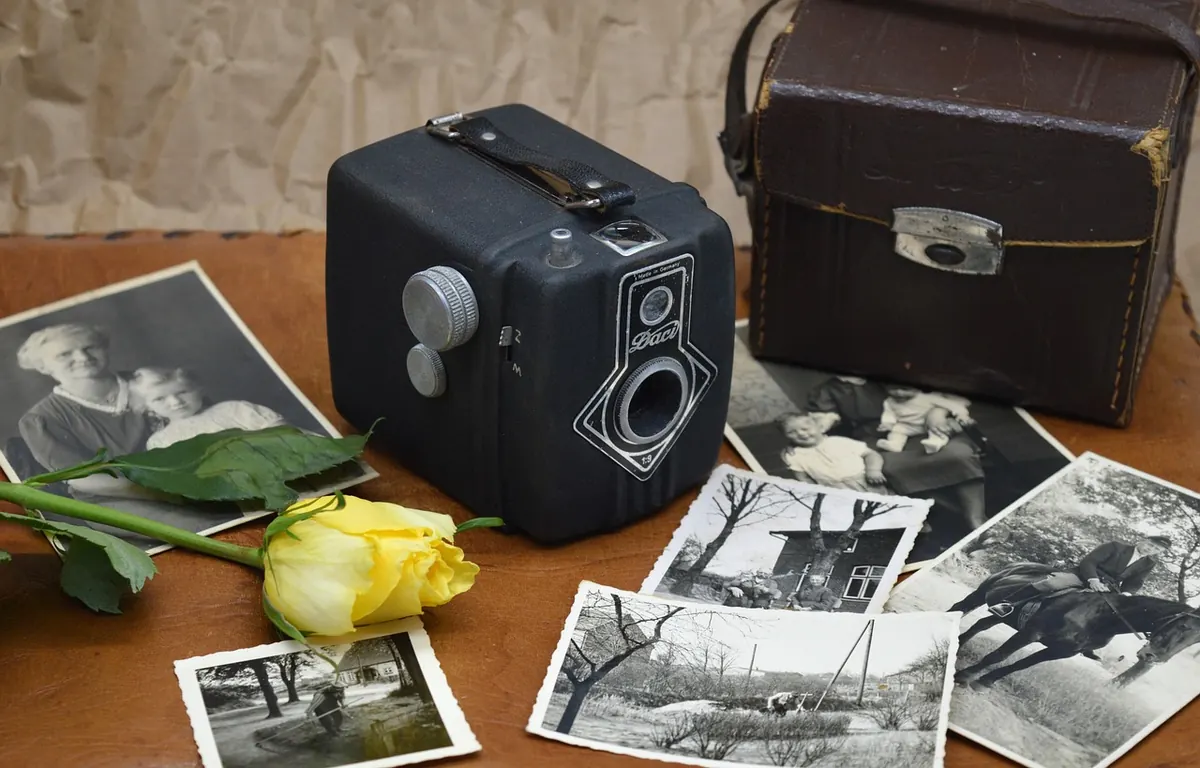
Somewhere in your home there is a box you avoid. You know the one: the shoebox of birthday cards, the carrier bag of your grandmother's letters, the drawer of ticket stubs and school reports you cannot face and cannot quite throw away.
Sentimental clutter is different from everything else. A duplicate garlic press is easy to judge; a card from someone who has died is not. The goal is not to become ruthless. It is to keep the memories that matter without keeping every object that carries them.
Why these items resist the usual rules
Most clutter asks a simple question: do I use this? Sentimental items refuse to answer. Their value is emotional rather than practical, which makes every decision feel like a judgement about the person or the period it represents. Throwing away a ticket stub does not throw away the holiday, but it can feel that way when your hand hovers over the bin.
Two ideas do most of the work in this category. The first is that memory lives in you, not in the object; the object is only a trigger, and triggers can be replaced. The second is that a limit decides better than a principle. "Keep what sparks joy" is lovely advice until you are holding your father's handwriting and everything sparks something.
Choose the container before you choose what stays
Find the box first, then sort into it. The box is the rule. If something does not fit, it has to be photographed, passed on or let go — and that decision gets made in advance, while you are calm, rather than in the moment with the item in your hand.
- A sturdy lidded box per person or per decade, roughly shoebox size
- One larger archive box for the household's oldest papers and photographs
- A4 document wallets for certificates, letters and official papers
- A small tin for the handful of things you would grab in a fire
Write the box's purpose on a label before you fill it. "Mum and Dad, 1960–1990" is a rule you will respect. "Old stuff" is not.
The photograph method
Photographing an item before releasing it gives you the memory without the bulk. It works best for children's artwork, ticket stubs, trophies, programmes, bulky gifts and the fourth mug from a matching set.
- Use daylight and a plain background — a table near a window is plenty.
- Photograph the front, then any detail that carries the story: a signature, a date, a handwritten note on the back.
- Name the file properly. "Nan's recipe book, 1972" will mean something in ten years; "IMG_4471" will not.
- Save it into a folder you will actually find again.
- Then let the object go, and notice that the memory has not gone with it.
For something you cannot bear to part with yet, put it in a "maybe" bag with a date on it. If you have not opened the bag in six months, you have your answer.
Six questions to ask about anything
- Would I recognise what this is in twenty years without a label?
- Does it hold a memory I genuinely recall, or just a fact I know?
- Am I keeping this for myself, or because I feel watched by the person who gave it to me?
- Does looking at it make me feel warm, or heavy?
- If this were damaged tomorrow, would I replace it?
- Would a photograph do the same job?
If four or five answers point the same way, trust them. If they are split, keep the item for now and revisit it at the next review.
Building a memory box that lasts
Choose a box that will survive
A sturdy, lidded, acid-free box is worth the small extra cost. Store it somewhere dry and ventilated — a cupboard inside the house, not a damp garage, a loft or against a cold external wall. Fold textiles with acid-free tissue or roll them to avoid hard creases.
Label and index as you go
Keep a card in the lid noting what is inside, whose it is and roughly which years it covers. Add a note for anything inherited: who it came from and when. This is the single kindest thing you can do for whoever sorts your belongings in fifty years.
Review it once a year
Ten minutes with a cup of tea. Things you were sure you would never release sometimes loosen their grip, and a box that stays purposeful is a box you will not dread opening.
Photos and letters, in practice
Photographs are usually the biggest pile and the easiest to reduce. Start by removing the blurry frames, the near-identical shots of the same view, and the scenery pictures with nobody in them. Keep the ones where faces are clear and occasions matter. Duplicates can be offered to relatives before they go.
Letters do not have to be kept as a complete correspondence. Keep the one or two that show the handwriting and the voice you want to remember, photograph the rest, and store the keepers flat rather than folded.
If you are digitising, scan at around 300 dpi, name files with the date first so they sort correctly, and back everything up in two places — one cloud service and one physical drive. If you are sorting the papers of someone who has died, keep wills, deeds, financial documents and anything official separate, and take professional advice before disposing of them.
Start with one shoebox tonight
Pick the smallest container in the house and set a twenty-minute timer. Make three piles: keep, photograph, pass on. Do not aim to finish; aim to make one box honest. Then put the lid on and stop. Sentimental sorting is tiring in a way that ordinary decluttering is not, and there is no prize for speed.
If the person these things belonged to died recently, or the process leaves you raw, leave it. Some boxes need a year before they can be opened. Come back when you are ready, and remember that the box is not a failure — it is simply the part of your home where the past is allowed to live.
Photo: neelam279 / Pixabay